


Why Custom ERP Solutions Outperform Off-The-Shelf Software for Mid-Market Manufacturers
Over the past decade working with manufacturing businesses across North America, I have witnessed a recurring dilemma: should we invest in a custom-built ERP system or adopt an existing enterprise solution? While off-the-shelf software dominates the conversation, my hands-on experience building and implementing more than a dozen enterprise solutions tells a different story. Mid-market manufacturers are discovering that custom ERP systems deliver far superior returns on investment, operational efficiency, and competitive advantage.
The fundamental difference comes down to fit. Enterprise software vendors build their solutions for a broad market, incorporating features that work for many but excel for none. Custom ERP systems, by contrast, are engineered specifically around your business processes, manufacturing workflows, and strategic objectives. This distinction is not academic. It directly impacts your bottom line.
The Hidden Costs of Off-The-Shelf Solutions
When I consult with mid-market manufacturers considering expensive enterprise solutions, I always ask the same question: how many features will you actually use? The typical response is telling. Most organizations use less than 30 percent of the functionality included in standard enterprise software. Meanwhile, they pay licensing fees for capabilities they do not need, maintain infrastructure for modules that add no value, and struggle to integrate systems that were never designed to work together seamlessly.
I worked with a hospital management organization struggling with a leading ERP platform. The software was powerful, feature-rich, and expensive. Yet their surgical scheduling, patient billing, and inventory management remained disconnected. They had implemented the system two years prior, yet their workflows still required manual intervention across multiple platforms. The problem was not the software’s quality. The problem was that no portion of the software perfectly aligned with their operational needs. They were forcing their unique processes into a generic mold.
The solution came not from adding more modules but from building a custom system designed specifically for healthcare operations. The results were transformative: 40 percent reduction in administrative overhead, 25 percent faster billing cycles, and a unified platform that required no external workarounds.
This is not an isolated case. Mid-market manufacturers face similar pressures. Off-the-shelf solutions often force you to restructure your business around the software rather than adapting the software to your business. Companies accept lower efficiency, workaround processes, and compromised decision-making rather than challenge the software vendor.
Strategic Alignment and Competitive Advantage
Custom ERP systems align directly with your competitive strategy. If your manufacturing operation depends on speed, a custom system can prioritize real-time production tracking, automated bottleneck identification, and dynamic scheduling. If quality is your differentiator, the system can embed quality checkpoints throughout the production lifecycle with immediate escalation protocols. If cost leadership drives your market position, the ERP can optimize inventory levels, minimize waste, and automate procurement decisions.
I designed an HR and payroll management system for a growing manufacturing network that needed to scale rapidly across multiple facilities. The standard enterprise solutions offered payroll processing and basic HR functions. But they lacked the flexibility needed to manage complex shift scheduling across three time zones, integrate with facility-specific labor agreements, or provide real-time visibility into labor costs per production line. The custom system I built provided exactly that capability. The result was 15 percent labor cost reduction through optimized scheduling and 20 percent improvement in payroll processing time.
Generic software cannot deliver this level of strategic alignment because vendors must accommodate thousands of different business models. Custom solutions accommodate your specific model.
Integration and Data Integrity
Manufacturing businesses operate complex technology ecosystems. You likely have quality management systems, equipment monitoring platforms, supplier portals, customer order systems, and financial accounting software. Off-the-shelf ERP solutions often integrate poorly with existing systems, creating data silos and requiring manual data transfer between platforms.
I built a custom banquet and hotel management system for a hospitality organization managing multiple properties. Their existing systems included booking platforms, point-of-sale terminals, housekeeping management, and accounting software. Integrating a monolithic enterprise solution would have created more problems than it solved. The custom system connected seamlessly with existing infrastructure while providing unified visibility across all properties. Data flowed automatically between booking, operations, inventory, and accounting. This eliminated manual reconciliation, reduced errors by 90 percent, and gave management real-time visibility into profitability across properties.
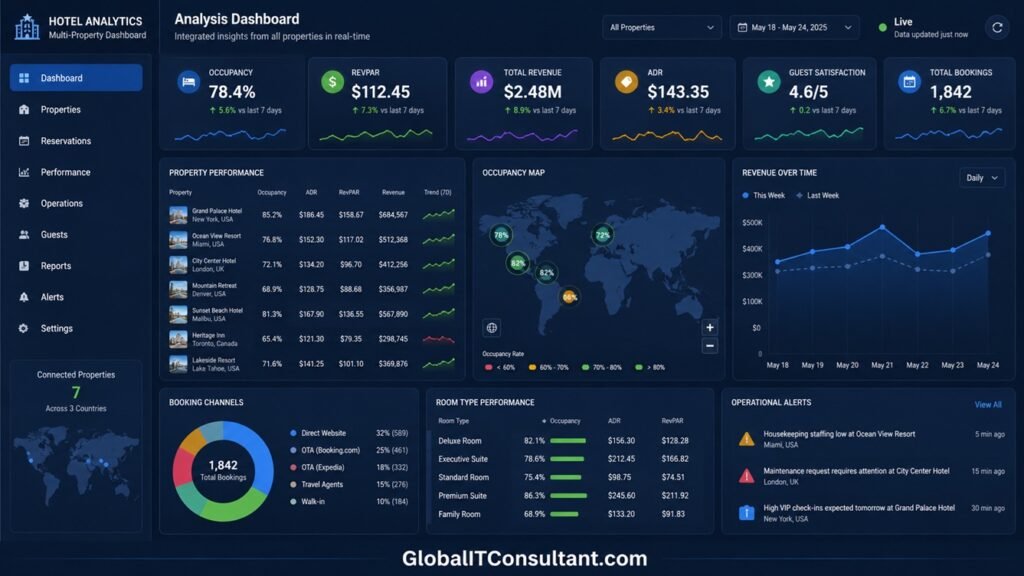
For manufacturers, the same principle applies. Your production systems, quality management platforms, supplier portals, and financial systems must work as a unified whole. Custom ERP solutions are built with integration as a core architecture principle. Off-the-shelf systems layer integration on top of their original design, creating performance bottlenecks and data consistency issues.
Scalability Without Compromise
Mid-market manufacturers grow. Your ERP must grow with you without requiring expensive upgrades or migrations. I worked with a pathology lab management organization that started with manual testing procedures and spreadsheet-based reporting. As they scaled, they needed digital systems that could grow from 50 daily tests to 500 without structural changes.
We built a custom system that scaled elegantly. Adding new testing procedures required adding configurations, not redesigning modules. Expanding to new facilities required database replication and synchronization, not purchasing additional licenses. Processing ten times more tests required adding hardware resources, not renegotiating contracts with vendors.
Standard enterprise software does not scale this way. You quickly hit licensing limitations or architectural boundaries. I have seen organizations outgrow enterprise platforms after just three years, forcing expensive migrations that disrupt operations and waste investment.
Compliance and Regulatory Alignment
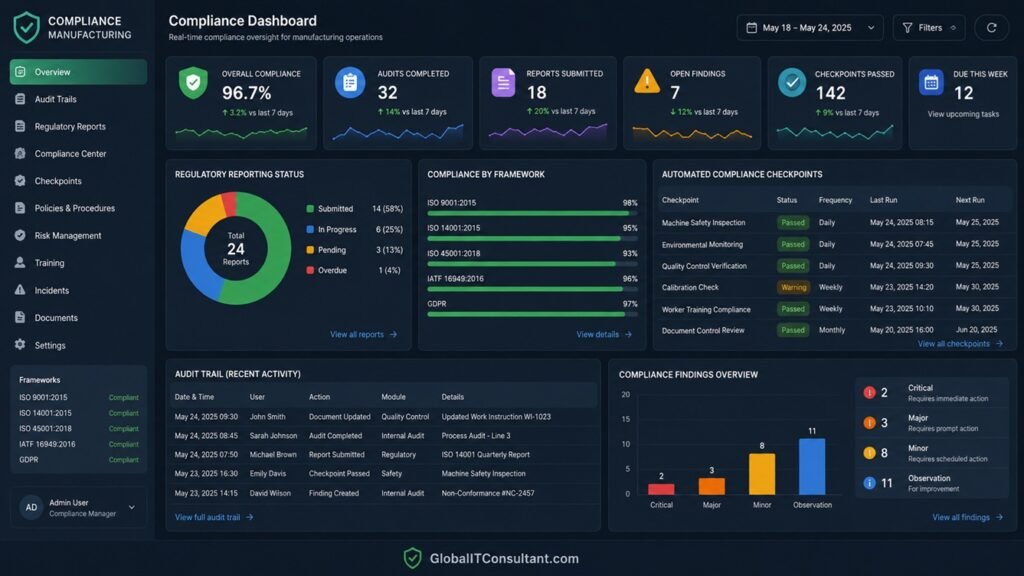
Manufacturing operates under regulatory scrutiny. FDA requirements, environmental compliance, safety protocols, quality standards, and industry-specific regulations vary significantly across sectors. Off-the-shelf software implements generic compliance features that may not address your specific regulatory requirements.
I designed a school management system that needed to comply with state education regulations, district policies, and federal reporting requirements across multiple states. Standard education software addressed generic compliance but missed specific state-level requirements. The custom solution embedded compliance into core workflows, automated required reporting, and provided audit trails specific to regulatory frameworks.
Manufacturing faces similar challenges. Whether you operate under FDA, ISO, or industry-specific requirements, your ERP must embed compliance into operational workflows. Custom systems can do this. Generic software treats compliance as an afterthought.
Cost Justification Over the Investment Lifecycle
The initial cost of custom ERP development appears higher than purchasing licenses for standard software. This perspective misses the total cost picture. License costs compound over time. Implementations require expensive consultants. Customizations to adapt the software to your needs cost tens of thousands of dollars. Support and maintenance are ongoing expenses. Upgrades force costly system modifications. Failed processes require workaround software, multiplying your technology footprint and cost.
I have calculated total cost of ownership for dozens of organizations. Over a ten-year period, custom ERP solutions typically cost 30 to 40 percent less than off-the-shelf alternatives when accounting for all factors: licensing, implementation, customization, integration, support, maintenance, and operational inefficiency from poor software-to-business fit.
More importantly, custom solutions deliver measurable returns. Operational improvements translate to quantifiable cost reductions. Faster decision-making improves competitive response time. Better data integrity reduces errors and rework. Integrated systems eliminate manual processes. These benefits compound, creating real business value that justifies the initial investment.
The Right Choice for Growing Manufacturers
Off-the-shelf software serves a purpose. Very small organizations with simple needs and very large enterprises with resources to manage complex implementations can find value in standard solutions. Mid-market manufacturers occupy a different position. You have sophisticated operations that generic software does not address well, but you may lack the scale to justify expensive enterprise implementations.
Custom ERP solutions are designed for your position. They deliver systems built around your specific needs, integrated with your existing technology, scalable as you grow, compliant with your regulatory requirements, and aligned with your competitive strategy. They require less disruption during implementation, faster time to value, and superior returns on investment.
The manufacturers I work with who have chosen custom ERP solutions report consistent results: improved operational efficiency, better decision-making through accurate data, faster growth without technology constraints, and measurable competitive advantages their off-the-shelf competitors cannot match.
Your ERP system is not a generic technology purchase. It is a strategic investment in your operational capability and competitive position. Choose a solution built specifically for your business, not one that forces your business to adapt to the software.
Note: Some Images / Dashboards in the article are edited with AI for creative visualization.
